Since 2019, education systems around the world have experienced one of the most dramatic transformations in modern history. Classrooms are no longer defined solely by physical spaces, printed textbooks, or chalkboards. Instead, they have expanded into digital environments where learning happens synchronously and asynchronously, in person and remotely, and often across multiple platforms.
In this new educational reality, technology is no longer optional—but using technology effectively remains a challenge. Simply adding devices into classrooms does not automatically improve learning outcomes. Many schools invest heavily in educational technology, yet struggle to move beyond basic digital substitution.
This is exactly where the SAMR Model becomes essential.
Developed by Dr. Ruben Puentedura, the SAMR Model provides educators with a clear framework for evaluating and improving how technology is used in instruction. Rather than focusing on the technology itself, SAMR emphasizes how technology—especially interactive flat panels—can meaningfully transform teaching and learning.
The SAMR Model consists of four progressive levels grouped into two broader categories: Enhancement and Transformation
Direct digital replacement with no functional change
EnhancementDigital replacement with functional improvements
EnhancementRedesign of learning tasks with technology
TransformationCreation of new learning experiences
TransformationRather than forcing educators to “jump” to the highest level immediately, SAMR encourages intentional, gradual progress, using technology to support pedagogy—not replace it. At the center of this evolution are interactive flat panels, which provide the flexibility, performance, and collaborative tools required to support all four stages.

Substitution represents the entry point of technology integration. At this level, technology acts as a direct replacement for traditional tools, without significant functional change.
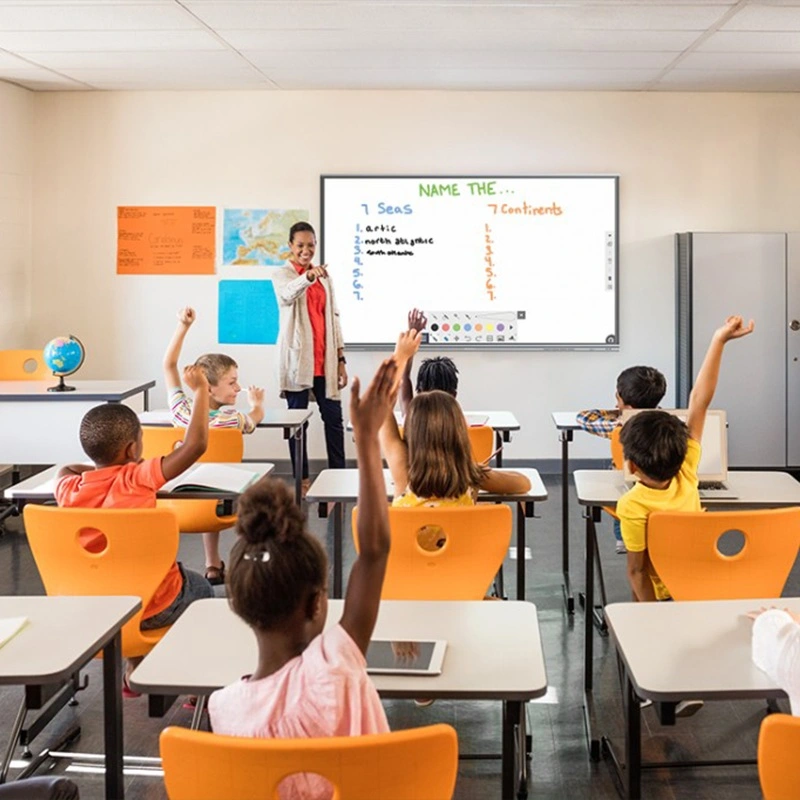
This is where interactive flat panels naturally shine. Instead of using traditional whiteboards or projectors, educators can use interactive flat panels as digital writing surfaces. Teachers write, draw, and explain concepts exactly as they would before—only now, content can be saved, shared, and reused.
At the Substitution stage, the goal is simplicity. Interactive flat panels reduce friction rather than add complexity, helping teachers feel confident using technology without disrupting established teaching methods.
Augmentation builds upon substitution by adding functional improvements that make learning more efficient, engaging, or accessible. At this level, interactive flat panels begin to show their real instructional value.
Instead of static lessons, educators can now:
With interactive flat panels, lessons become dynamic rather than linear. For example, a teacher explaining a science concept can instantly pull up diagrams, zoom into details, annotate key areas, and invite students to interact directly on the screen. This creates a richer learning experience without changing the lesson’s core structure.
These enhancements help ensure that more students can access content in ways that match their learning styles.

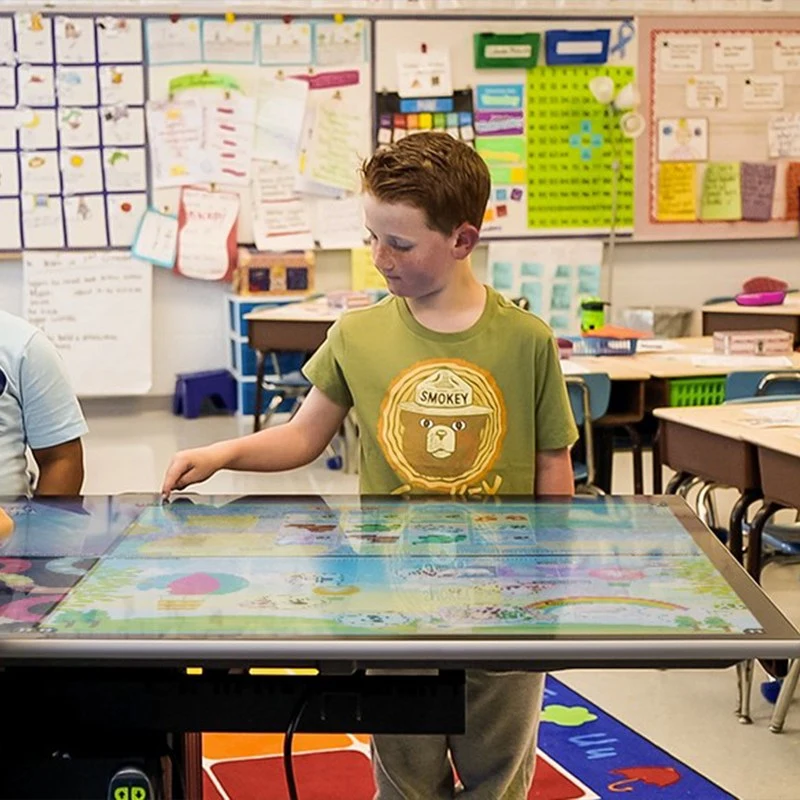
Modification marks the transition from enhancement to transformation. At this stage, technology allows educators to redesign learning tasks in ways that were previously impractical or impossible. This is where interactive flat panels become collaborative hubs rather than presentation tools.
Using interactive flat panels, educators can:
Students are no longer passive recipients of information. Instead, they actively participate—moving objects, writing ideas, and building knowledge together.
Lessons can now evolve in response to student input. Teachers can adjust instruction dynamically, responding to questions, misconceptions, or new ideas as they arise.
Redefinition represents the highest level of the SAMR Model. At this stage, technology enables entirely new forms of learning that could not exist without it. Interactive flat panels are central to this transformation.
At the Redefinition level, educators can:
With interactive flat panels, students can engage in:
Learning becomes immersive, personalized, and deeply engaging. For students with additional learning needs, interactive flat panels provide visual, tactile, and auditory pathways that support inclusive education. Adjustable interfaces, collaborative tools, and real-time feedback help ensure that every learner can participate meaningfully.
Across all four SAMR levels, one truth becomes clear: interactive flat panels are not just display devices—they are instructional platforms.
Support for traditional teaching methods with digital enhancements
Multi-user interaction tools for active learning experiences
Seamless integration of in-person and remote learning
Flexibility to move between SAMR levels as needed
With Qtenboard interactive flat panels, schools gain a flexible foundation that adapts to evolving educational needs without forcing educators to abandon familiar practices.
The SAMR Model is not about using more technology—it is about using technology better. When educators pair the SAMR framework with thoughtfully designed interactive flat panels, they unlock new opportunities for engagement, collaboration, and creativity.
When the answer is yes, technology becomes more than a tool—it becomes a catalyst for transformation. With interactive flat panels, and a clear framework like SAMR, classrooms are no longer limited by walls, paper, or static instruction. Instead, they become dynamic learning ecosystems where students are prepared not just to absorb information—but to apply, create, and thrive.
單擊以閱讀產品詳細信息,並了解其功能特性和實際性能。
📖閱讀產品